




Stomach Cancer
Stomach cancer, also called gastric cancer, develops when malignant cells form in the lining of the stomach. It remains among the more commonly diagnosed gastrointestinal cancers globally, and awareness of its symptoms can significantly influence how early it is detected. For patients across Noida and Delhi NCR looking for a stomach cancer surgery specialist or comprehensive gastric oncology support, structured specialist care is essential.
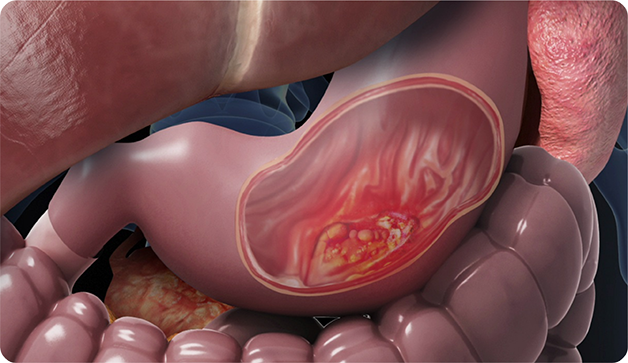


Types of Stomach Cancer
Gastric cancers are classified by cell of origin, histological subtype, and molecular characteristics — each influencing treatment decisions.
Gastric Adenocarcinoma: The most common type, accounting for approximately 90–95% of all stomach cancers. It arises from the glandular cells lining the stomach. Further classified by the Lauren system into:
• Intestinal type: More common in older adults, often associated with H. pylori infection and dietary factors. Better differentiated, grows more slowly, and is more amenable to surgical resection.
• Diffuse type: More aggressive, often affecting younger patients. Cells infiltrate the stomach wall individually (signet ring cells), making surgical margins difficult. Associated with hereditary diffuse gastric cancer (CDH1 gene mutation).
Gastrointestinal Stromal Tumour (GIST): Arises from the interstitial cells of Cajal in the stomach wall. GISTs are driven by KIT or PDGFRA mutations and are treated with imatinib (targeted therapy) rather than conventional chemotherapy. Surgery is the primary treatment for localised GISTs.
Gastric Lymphoma: Primary gastric lymphoma — most commonly mucosa-associated lymphoid tissue (MALT) lymphoma — can arise in the stomach. MALT lymphoma is often linked to H. pylori infection and may regress with antibiotic eradication alone in early stages.
Gastric Neuroendocrine Tumours (NETs/Carcinoids): Arise from enterochromaffin-like cells in the stomach lining. Low-grade NETs may be managed with endoscopic resection; high-grade neuroendocrine carcinomas require aggressive systemic treatment.
Carcinosarcoma and Other Rare Subtypes: Extremely rare mixed tumours requiring individualised specialist review.
Molecular subtyping using the Cancer Genome Atlas (TCGA) classification — identifying EBV-positive, microsatellite instability (MSI-high), chromosomally unstable (CIN) and genomically stable (GS) subtypes — is increasingly used to guide targeted and immunotherapy decisions, particularly for advanced gastric cancer.
Common Symptoms
Stomach cancer often grows silently in its early stages. When symptoms develop, they may include:
• Persistent indigestion or heartburn that does not respond to standard treatment
• Feeling full quickly after small meals (early satiety)
• Unexplained weight loss
• Upper abdominal pain or discomfort
• Nausea or vomiting
• Fatigue associated with anaemia from occult blood loss
• Blood in the stool or vomit, if present, requires urgent evaluation.
How Is Stomach Cancer Diagnosed?
The primary diagnostic tool is upper gastrointestinal endoscopy, which allows direct visualisation of the stomach lining and targeted biopsy of any suspicious areas. After histological confirmation, staging investigations typically include a CT scan of the chest, abdomen and pelvis to assess local spread and distant metastases. PET-CT and endoscopic ultrasound (EUS) may be used for more precise local staging. Gastric cancer treatment cost in Noida can vary considerably depending on the stage at diagnosis and treatment pathway.
Treatment Options
Surgery: For localised gastric cancer, surgery is the cornerstone of curative treatment. Procedures may range from partial gastrectomy to total gastrectomy, often with removal of regional lymph nodes (D2 lymphadenectomy). IOCI Noida's surgical oncology team evaluates each patient's operability through the Tumour Board process.
Perioperative Chemotherapy: For resectable gastric cancer, international guidelines support the FLOT regimen — fluorouracil, leucovorin, oxaliplatin and docetaxel — given before and after surgery to improve outcomes.
Immunotherapy: For advanced HER2-negative gastric cancer, nivolumab in combination with chemotherapy is an established first-line option per NCCN and ESMO guidelines.
Targeted Therapy: HER2-positive gastric cancer may benefit from trastuzumab combined with chemotherapy as a first-line option.
Radiation Therapy: May be considered as part of multimodal treatment in selected cases.
Recovery: After stomach surgery, patients typically require dietary modification, nutritional monitoring, and physiotherapy support. IOCI Noida provides dietary and nutritional counselling as part of its patient care.
