




Oesophageal Cancer
The oesophagus, or food pipe, is the muscular tube connecting the throat to the stomach. Cancer of the oesophagus develops when abnormal cells grow uncontrollably within this tube, gradually impairing the ability to swallow and, if untreated, spreading to nearby lymph nodes and organs. In India, oesophageal cancer accounts for a notable proportion of gastrointestinal cancers, with tobacco use, alcohol consumption, and dietary habits among the key contributing factors.
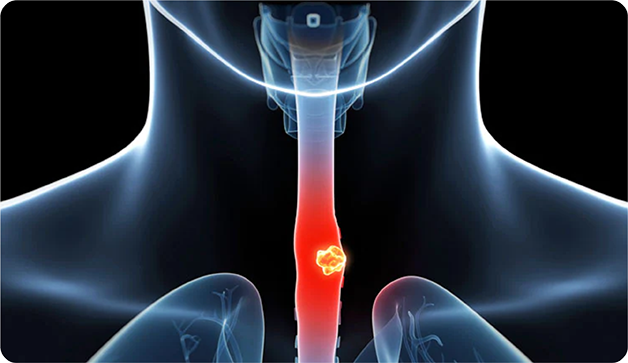


Types of Oesophageal Cancer
In clinical practice, clinicians encounter two main histological types and several rarer subtypes. The type is determined by the location within the oesophagus and the cell of origin.
Squamous Cell Carcinoma (SCC): Arises from the flat squamous cells lining the oesophagus. SCC is more commonly seen in the middle or upper oesophagus. It is strongly associated with tobacco use (all forms), heavy alcohol consumption, and consumption of very hot beverages. SCC is the predominant type in India and most of Asia.
Adenocarcinoma: Develops from glandular cells, most commonly in the lower oesophagus near the gastro-oesophageal junction. Adenocarcinoma is associated with chronic gastro-oesophageal reflux disease (GERD), Barrett's oesophagus, and obesity. More common in Western populations but increasing in frequency globally.
Oesophageal Neuroendocrine Tumours (NETs): Rare tumours arising from neuroendocrine cells within the oesophageal wall. Behaviour ranges from indolent (low-grade) to highly aggressive (high-grade, similar to small cell carcinoma).
Small Cell Carcinoma of the Oesophagus: Extremely rare and highly aggressive. Behaves similarly to small cell lung cancer and is typically treated with chemotherapy rather than surgery.
Oesophageal Melanoma: Primary melanoma of the oesophagus is very rare. Most oesophageal melanoma is metastatic from a skin primary.
Gastrointestinal Stromal Tumour (GIST) of the Oesophagus: Rare mesenchymal tumour; treated with imatinib rather than conventional chemotherapy when advanced.
The distinction between SCC and adenocarcinoma influences not only treatment selection but also the neoadjuvant treatment protocol recommended. The CROSS protocol (carboplatin-paclitaxel with radiation) is used for both, while the FLOT regimen is more commonly used for adenocarcinoma at the gastro-oesophageal junction.
Early Symptoms
Difficulty swallowing (dysphagia) is the most recognisable symptom of oesophageal cancer. It typically begins with difficulty swallowing solid foods before progressing to semi-solids and eventually liquids. Associated symptoms may include:
• Progressive weight loss
• Regurgitation of food
• Persistent chest discomfort or a sense of pressure
• Hoarseness or a chronic cough
• Heartburn that worsens or changes in character
These symptoms are not exclusive to oesophageal cancer, but any new or progressive swallowing difficulty warrants prompt evaluation by an oesophageal cancer specialist.
Causes and Risk Factors
The strongest modifiable risk factors for oesophageal squamous cell carcinoma include tobacco use in all forms (smoking, chewing tobacco and betel nut use) as well as heavy alcohol consumption. For adenocarcinoma, chronic acid reflux, Barrett's oesophagus and obesity are the primary drivers. A diet low in fruits and vegetables and high in very hot beverages also contributes to risk.
Diagnosis
A gastroenterologist or oncologist typically recommends upper gastrointestinal endoscopy with biopsy as the primary diagnostic investigation. Following histological confirmation, staging investigations include a CT scan of the chest and abdomen and a PET-CT to assess for metastatic spread, and endoscopic ultrasound (EUS) for local staging of tumour depth and lymph node involvement.
Is Surgery Required for All Stages?
Not all oesophageal cancer patients are candidates for surgery. Surgical resection (oesophagectomy) is generally considered for localised, resectable tumours in patients with adequate cardiorespiratory reserve. For many patients, the treatment plan combines approaches:
Neoadjuvant Chemoradiotherapy: Chemotherapy and radiation delivered before surgery can shrink the tumour, potentially improving surgical outcomes and the completeness of resection.
Definitive Chemoradiotherapy: For patients not suitable for surgery, or for cervical oesophageal tumours where surgery carries significant morbidity, concurrent chemotherapy with radiation is a well-established alternative to oesophageal cancer surgery.
Immunotherapy: For advanced or metastatic oesophageal cancer, immunotherapy agents such as nivolumab may be considered based on PD-L1 expression and tumour characteristics, per current NCCN and ESMO guidelines.
Endoscopic Treatments: Very early-stage lesions, including high-grade dysplasia or superficial tumours, may be addressed endoscopically.
Palliative Care: For advanced disease, interventions to restore swallowing such as oesophageal stenting combined with systemic therapy and palliative care can significantly improve quality of life.
IOCI Noida's multidisciplinary Tumour Board reviews each case to align the treatment plan with the patient's disease stage, fitness and goals of care.
