




Pancreatic Cancer
Pancreatic cancer is among the more challenging cancers in oncology — not because it is untreatable, but because it is often diagnosed at a stage when curative surgery is no longer straightforward. Understanding why early detection matters and what treatment options exist can help patients and their families approach diagnosis with clarity and direction. For those looking for a pancreatic cancer specialist near me in Noida or the Delhi NCR area, specialist oncology care is available at IOCI Noida.
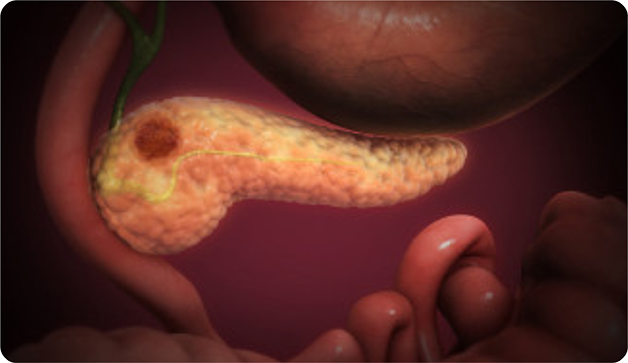


Why Is Pancreatic Cancer Often Diagnosed Late?
The pancreas is a deep-seated organ located behind the stomach. In its early stages, pancreatic cancer rarely produces symptoms noticeable enough to prompt medical investigation. Pain, jaundice, and weight loss are the symptoms most likely to bring a patient to a doctor and tend to appear only once the tumour has grown large enough to press on adjacent structures such as the bile duct or surrounding nerves. This anatomical reality is why the majority of pancreatic cancers are discovered at a locally advanced or metastatic stage.
Types of Pancreatic Cancer
The pancreas has two functional components, exocrine (digestive enzyme-producing) and endocrine (hormone-producing), and cancers can arise from either. The type determines prognosis and treatment.
Pancreatic Ductal Adenocarcinoma (PDAC): Accounts for approximately 85–90% of all pancreatic cancers. It arises from the ductal epithelium of the exocrine pancreas and is the most aggressive and commonly diagnosed type. PDAC is the pancreatic cancer most people are referring to when they say "pancreatic cancer".
Pancreatic Neuroendocrine Tumours (PNETs): Arise from the hormone-producing cells of the pancreas. PNETs are far less common than PDAC but generally carry a better prognosis. They include:
- Non-functioning PNETs: Do not produce excess hormones and are often discovered incidentally.
- Functioning PNETs: Produce excess hormones causing clinical syndromes — insulinoma (excess insulin), gastrinoma (Zollinger-Ellison syndrome), glucagonoma, VIPoma, and somatostatinoma.
Acinar Cell Carcinoma: Rare, arising from the enzyme-secreting acinar cells. May be associated with elevated lipase levels and a distinct clinical presentation.
Solid Pseudopapillary Neoplasm (SPN): A rare, low-grade malignancy predominantly affecting young women. Generally carries an excellent prognosis with surgical resection.
Ampullary Carcinoma: Arises at the ampulla of Vater — the junction of the bile duct and pancreatic duct where they enter the duodenum. Though anatomically adjacent to the pancreas, it is technically distinct and generally carries a better prognosis than PDAC.
Cystic Neoplasms: Intraductal papillary mucinous neoplasms (IPMNs) and mucinous cystic neoplasms (MCNs) are precancerous cystic lesions that require monitoring and selective surgical resection based on high-risk features.
The chemotherapy regimens, surgical approaches, and targeted therapy eligibility differ significantly between PDAC and PNETs, underscoring the importance of accurate pathological diagnosis before treatment begins.
Early Warning Signs
While early pancreatic cancer is often silent, some warning signs that should prompt medical review include:
• New-onset diabetes in individuals over 50 with no prior risk factors
• Unexplained weight loss and loss of appetite
• Upper abdominal or back pain that is persistent
• Jaundice — yellowing of the skin and eyes — often caused by bile duct obstruction.
• Pale, greasy stools and dark urine
• Persistent nausea or indigestion
None of these symptoms is specific to pancreatic cancer, but when they occur together or persist without explanation, they warrant evaluation. Jaundice caused by bile duct obstruction may also be relieved through biliary stenting before or instead of surgery, depending on the clinical situation. This is both a palliative and occasionally a pre-operative intervention.
Diagnosis
Imaging is central to diagnosing pancreatic cancer. A contrast-enhanced CT scan of the abdomen (pancreatic protocol) is the standard first investigation. MRI with MRCP (magnetic resonance cholangiopancreatography) may be used to better characterise the bile duct and pancreatic duct. Endoscopic ultrasound (EUS) with fine needle aspiration allows tissue biopsy in selected cases. CA 19-9, a serum tumour marker, may be elevated in pancreatic cancer but is not diagnostic on its own. PET-CT assists in staging by detecting distant spread.
Is Surgery Possible?
Surgery offers the best chance of long-term disease control for pancreatic cancer, but it is only appropriate for surgically resectable tumours, meaning the tumour has not encased major blood vessels or spread to distant sites.
Whipple Surgery (Pancreaticoduodenectomy): The most commonly performed operation for cancer of the head of the pancreas, involving removal of the head of the pancreas, the duodenum, a portion of the bile duct, the gallbladder, and sometimes part of the stomach. Whipple surgery in Noida is a complex, high-stakes procedure requiring an experienced surgical oncology team.
Distal Pancreatectomy: Used for cancers in the body or tail of the pancreas.
For borderline resectable or locally advanced pancreatic cancer, neoadjuvant chemotherapy is often given first to potentially shrink the tumour before surgery is reconsidered.
The Role of Chemotherapy
Chemotherapy plays a central role both before and after surgery and for patients with advanced or unresectable disease. FOLFIRINOX (fluorouracil, leucovorin, irinotecan and oxaliplatin) and gemcitabine with nab-paclitaxel are standard regimens, supported by ESMO and NCCN guidelines. For patients with specific genetic mutations, such as BRCA1/2, targeted approaches, including PARP inhibitors, may be considered as part of a personalised treatment plan. For patients with unresectable disease, specialist palliative care, including pain management and nutritional support, is an essential part of comprehensive care alongside systemic treatment.
