




Gallbladder Cancer
The gallbladder is a small organ that sits just under the liver. Its job is to store bile. A fluid that helps the body break down food. Gallbladder cancer is rare and often found late, after it has already grown or spread. This is why knowing the early signs matters. For patients and families in Noida and the Delhi NCR area, seeing a specialist as soon as possible gives the best chance of more treatment choices.
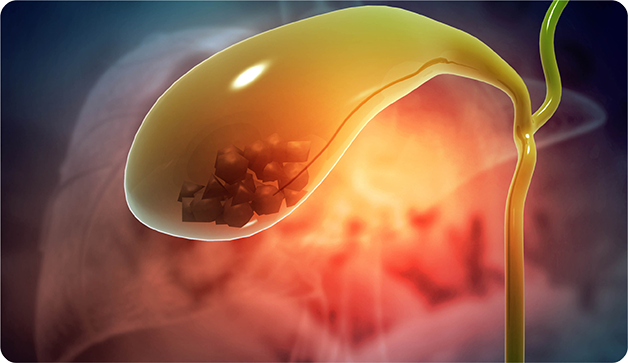


What Is Gallbladder Cancer?
Gallbladder cancer refers to malignant growth originating within the gallbladder wall. Adenocarcinoma arising from glandular cells lining the gallbladder accounts for the vast majority of cases. Less common variants include squamous cell carcinoma and other rare subtypes. Because the gallbladder is located deep within the abdomen, tumours can grow substantially before causing noticeable symptoms.
Types of Gallbladder Cancer
Identifying the specific type of gallbladder cancer guides surgical planning and systemic treatment decisions.
Adenocarcinoma: Accounts for approximately 85–90% of all gallbladder cancers. It arises from the glandular epithelium lining the gallbladder's inner wall. Adenocarcinoma is further classified as papillary (better prognosis), tubular, mucinous, and signet ring cell subtypes, each with distinct biological behaviour.
Squamous Cell Carcinoma: Arises from squamous cells and accounts for a small proportion of cases. It tends to be more aggressive than adenocarcinoma.
Adenosquamous Carcinoma: A mixed tumour containing both glandular and squamous elements. Rare and typically aggressive.
Small Cell (Neuroendocrine) Carcinoma: Extremely rare; behaves similarly to small cell lung cancer with rapid progression and early metastasis.
Carcinosarcoma: A rare mixed tumour containing both carcinoma and sarcoma elements, requiring individualised treatment.
Secondary (Metastatic) Gallbladder Tumours: Cancer that spreads to the gallbladder from another primary site is uncommon but recognised in clinical practice. Papillary adenocarcinoma of the gallbladder generally carries a better prognosis than non-papillary subtypes and may be more amenable to surgical resection with curative intent.
Symptoms of Gallbladder Cancer
Gallbladder cancer symptoms can be vague and non-specific, which contributes to its frequent late diagnosis. Patients may experience:
Upper right abdominal pain or discomfort
• Jaundice — yellowing of the skin and eyes caused by bile duct obstruction
• Unexplained weight loss
• Nausea or vomiting
• Abdominal bloating
• Fever
Some patients receive their gallbladder cancer diagnosis incidentally after a cholecystectomy performed for presumed gallstones, highlighting the importance of pathological examination of all removed specimens.
Why Is Gallbladder Cancer Often Diagnosed Late?
Gallbladder cancer is frequently diagnosed late for two main reasons. First, the gallbladder lies beneath the liver and does not produce specific early symptoms. Second, gallbladder cancer is frequently mistaken for benign gallbladder conditions such as cholecystitis or cholelithiasis (gallstones). By the time symptoms such as jaundice or significant abdominal pain appear, the cancer has often spread to adjacent structures or lymph nodes. The CA 19-9 blood marker may be elevated in gallbladder cancer and is used alongside imaging for monitoring, though it is not a standalone diagnostic test.
Is Gallbladder Cancer Linked to Gallstones?
There is a well-recognised association between gallstones (cholelithiasis) and gallbladder cancer. Chronic gallstone disease causes persistent inflammation and mucosal damage, which over time can contribute to malignant transformation. However, having gallstones does not mean cancer will develop. The absolute risk remains relatively low. Other risk factors include porcelain gallbladder, gallbladder polyps larger than 1 cm, chronic bacterial infections such as Salmonella typhi, obesity, and a family history of gallbladder disease.
Surgical Options at IOCI Noida
Surgery is the only potentially curative treatment for gallbladder cancer and is most effective when the disease is detected at an early, localised stage.
Simple Cholecystectomy: For incidentally discovered very early-stage gallbladder cancer (T1a), cholecystectomy alone may be sufficient.
Extended or Radical Cholecystectomy: For locally advanced disease, gallbladder cancer surgery in Noida may involve removal of the gallbladder along with a margin of liver tissue and regional lymph node dissection. The extent of resection depends on staging, which must be carefully determined before surgery.
Palliative Procedures: When the disease is unresectable, interventions to relieve jaundice, such as biliary stenting, can improve quality of life and enable systemic treatment.
IOCI Noida's surgical oncology team, supported by the International Tumour Board, reviews staging and surgical candidacy for complex GI cancers, including gallbladder malignancies. The gallbladder cancer treatment cost depends on surgical complexity, stage, and individual care needs.
Treatment of Advanced Gallbladder Cancer
For advanced or metastatic gallbladder cancer where surgery is not feasible, systemic chemotherapy is the primary treatment approach. Gemcitabine with cisplatin is an established first-line regimen for advanced biliary tract cancers, supported by international guidelines from ESMO and ASCO. Biomarker testing for FGFR2, IDH1, and other alterations in biliary tract cancers may guide targeted therapy eligibility in selected patients, and molecular profiling is increasingly incorporated into treatment planning for advanced disease.
