




Osteosarcoma
Osteosarcoma is the most common primary malignant bone tumour, arising from bone-forming cells called osteoblasts. While it can occur at any age, it predominantly affects children, adolescents and young adults, making it one of the most emotionally challenging cancer diagnoses a family can face. Understanding the available treatments, including limb-preserving approaches, can provide patients and families with a clearer sense of the journey ahead.
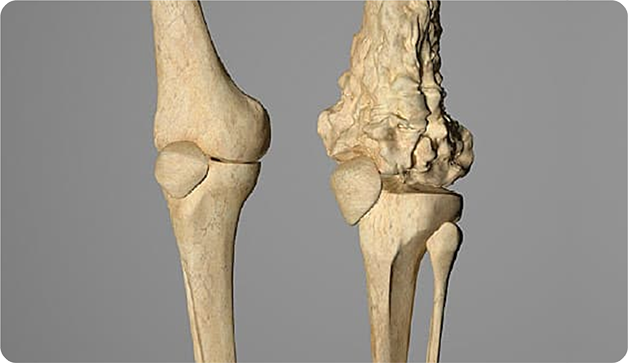


At What Age Is Osteosarcoma Most Commonly Diagnosed?
Osteosarcoma most frequently develops during periods of rapid bone growth, typically in adolescents between the ages of 10 and 20. A second, smaller peak occurs in older adults, often in the setting of pre-existing bone conditions such as Paget's disease or prior radiation exposure. The most common sites are the distal femur (lower thigh bone), proximal tibia (upper shin bone), and proximal humerus (upper arm bone), particularly around the knee joint.
Types of Osteosarcoma
Osteosarcoma is not a single disease several subtypes exist, each with distinct clinical behaviour and treatment implications.
Conventional (High-Grade) Osteosarcoma: The most common type, accounting for approximately 80% of all osteosarcomas. It is a high-grade tumour that arises within the medullary cavity of the bone. Three histological variants exist within conventional osteosarcoma:
-
Osteoblastic: Produces bone matrix (most common)
-
Chondroblastic: Produces cartilage-like matrix.
-
Fibroblastic: Produces fibrous matrix.
All three variants are treated with the same MAP chemotherapy protocol and limb salvage surgery regardless of subtype.
Telangiectatic Osteosarcoma: A high-grade subtype characterised by large blood-filled cavities. Can mimic an aneurysmal bone cyst on imaging. Treated with standard MAP protocol.
Small Cell Osteosarcoma: Resembles Ewing sarcoma under the microscope. Treated with osteosarcoma protocols rather than Ewing sarcoma protocols, distinguished by molecular testing.
Low-Grade Central Osteosarcoma: An intramedullary, well-differentiated tumour. Less aggressive. May be treated with surgery alone without chemotherapy in selected cases.
Parosteal Osteosarcoma: Arises on the outer surface (cortex) of the bone, most commonly the posterior distal femur. Low grade. Treated with surgical resection — chemotherapy is generally not required for pure parosteal osteosarcoma without high-grade dedifferentiation.
Periosteal Osteosarcoma: Intermediate-grade surface osteosarcoma. Requires chemotherapy and surgery.
High-Grade Surface Osteosarcoma: Rare; treated like conventional high-grade osteosarcoma.
Secondary Osteosarcoma: Arises in pre-existing bone abnormalities such as Paget's disease, bone infarcts, prior radiation, or fibrous dysplasia. It is more common in older adults and carries a less favourable prognosis.
Symptoms of Osteosarcoma
• Persistent, localised bone pain often initially dismissed as growing pains.
• Swelling or a visible mass over the affected bone
• Warmth and tenderness around the tumour
• Limited range of motion in the nearest joint
• Pathological fracture a fracture that occurs through weakened bone at the tumour site, sometimes with minimal force
• General fatigue in advanced disease
Bone pain in young people that is persistent, wakes them from sleep, or is not related to activity deserves specialist evaluation without delay. Consulting the best orthopedic oncologist in Noida or a bone tumour specialist early is strongly advisable.
Diagnosis
Diagnosis involves a plain X-ray (which may show a characteristic "sunburst" appearance or periosteal reaction), followed by an MRI of the entire affected bone for local staging. A CT scan of the chest assesses for pulmonary metastases, the most common site of distant spread. Bone scan or PET-CT detects skip lesions or other bony metastases. Biopsy performed by an experienced orthopaedic oncologist, ideally at a specialist centre, confirms the diagnosis histologically. The biopsy tract must be planned carefully to avoid compromising subsequent surgery.
The Role of Chemotherapy Before and After Surgery
Modern osteosarcoma treatment is built around a chemotherapy-surgery-chemotherapy framework. Neoadjuvant chemotherapy (before surgery) using high-dose methotrexate, doxorubicin and cisplatin (MAP protocol) aims to shrink the primary tumour, treat micrometastatic disease and allow assessment of chemotherapy response at the time of surgery. High-dose methotrexate used in the MAP protocol requires careful monitoring and leucovorin rescue. This treatment is administered in specialist oncology settings only. Adjuvant chemotherapy (after surgery) continues systemic treatment to reduce recurrence risk. In selected patients with resectable lung metastases, surgical removal of pulmonary deposits may also be considered as part of the overall treatment plan.
Is Limb-Saving Surgery Possible?
For the majority of patients with localised osteosarcoma, limb-saving surgery in Noida, known as limb salvage surgery, is now the standard of care, replacing amputation in most cases. Modern surgical techniques, including customised endoprostheses (metallic implants) or biological reconstruction methods, allow for the removal of the tumour with adequate margins while preserving limb function.
Amputation may still be required in select cases such as extensive local disease, involvement of critical vessels or nerves, or when margins cannot be achieved safely with limb-sparing approaches.
